Assured career progression gives employees a clearer path to professional growth by linking advancement to skills, performance, experience, and development opportunities. Instead of leaving employees uncertain about their future, a structured progression system explains what they need to achieve to move toward higher responsibilities.
For organizations, career progression can support employee engagement, talent development, retention, and long-term workforce planning. For employees, it provides direction and encourages continuous improvement.
What Is Assured Career Progression?
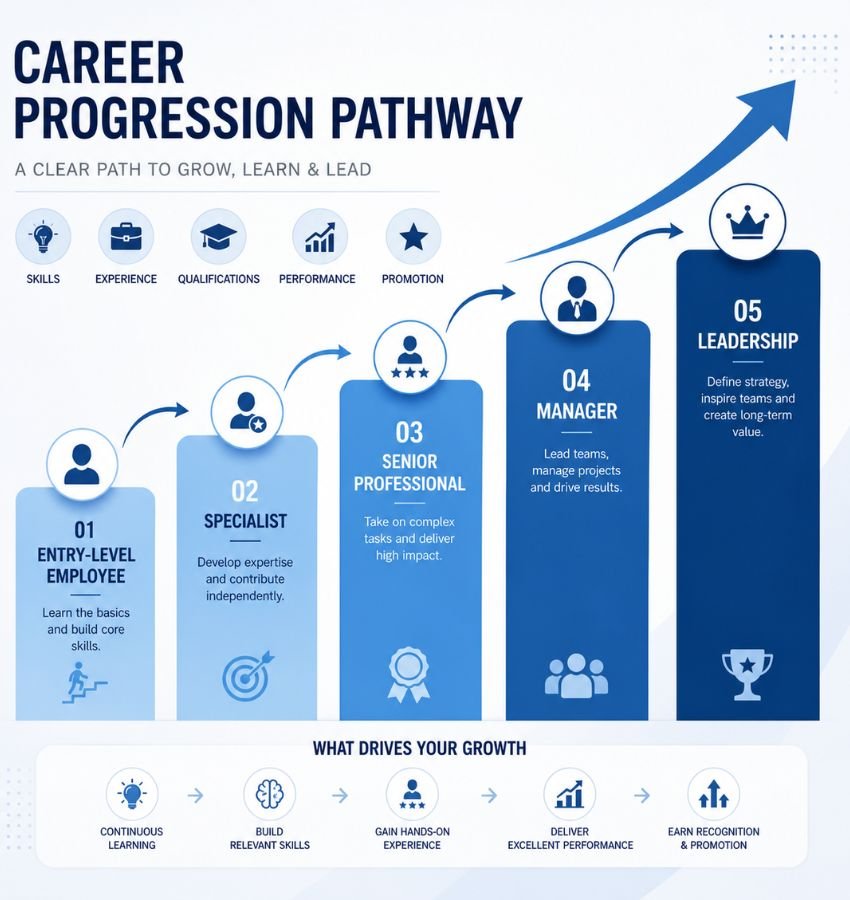
Assured career progression is a structured approach to career development where employees have clearly defined opportunities to advance within an organization. Progression may depend on factors such as job performance, qualifications, experience, competencies, and demonstrated skills.
A well-designed system can include career levels, promotion requirements, training programs, performance reviews, mentoring, and individual development plans. These elements help employees understand what is expected at each stage of their careers.
Why Is Career Progression Important?
Career progression is important because employees are more likely to remain motivated when they can see opportunities for professional development. Clear advancement criteria can also reduce uncertainty and help employees focus on meaningful goals.
Organizations can benefit from structured progression through:
- Higher employee engagement
- Better talent retention
- Improved productivity
- Stronger leadership development
- Better workforce planning
- Increased job satisfaction
- More effective succession planning
When employees understand how their contributions connect to career opportunities, they can take greater ownership of their professional development.
Key Elements of Assured Career Progression
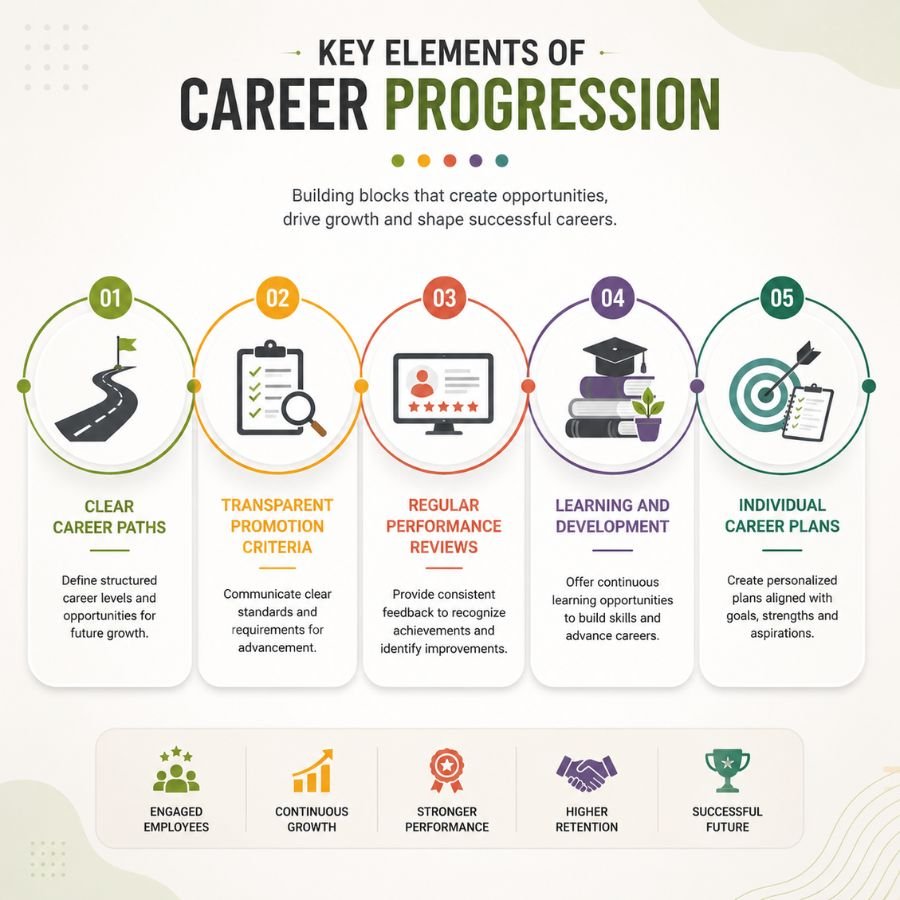
A successful career progression program usually includes several important elements.
1. Clear Career Paths
Employees should understand the different career levels available within their roles. Each level should have clearly defined responsibilities, skills, and expectations.
For example, an employee may progress from an entry-level position to a specialist role, then move into a senior or management position as their experience and capabilities increase.
2. Transparent Promotion Criteria
Promotion decisions should be based on clearly communicated criteria. Organizations can consider performance, relevant skills, qualifications, experience, leadership abilities, and achievement of agreed objectives.
Transparent criteria help employees understand what they need to accomplish before seeking advancement.
3. Regular Performance Reviews
Regular performance reviews provide an opportunity to discuss achievements, development needs, career goals, and future responsibilities.
Managers can use these discussions to identify employee strengths and recommend areas for improvement.
4. Learning and Development
Training is an important part of career progression. Organizations can provide workshops, professional certifications, technical training, mentoring, and leadership development programs.
Continuous learning helps employees prepare for more complex responsibilities.
5. Individual Career Plans
Employees can work with managers to create personalized development plans. These plans may include short-term objectives, long-term career goals, required skills, training activities, and measurable milestones.
Benefits for Employees
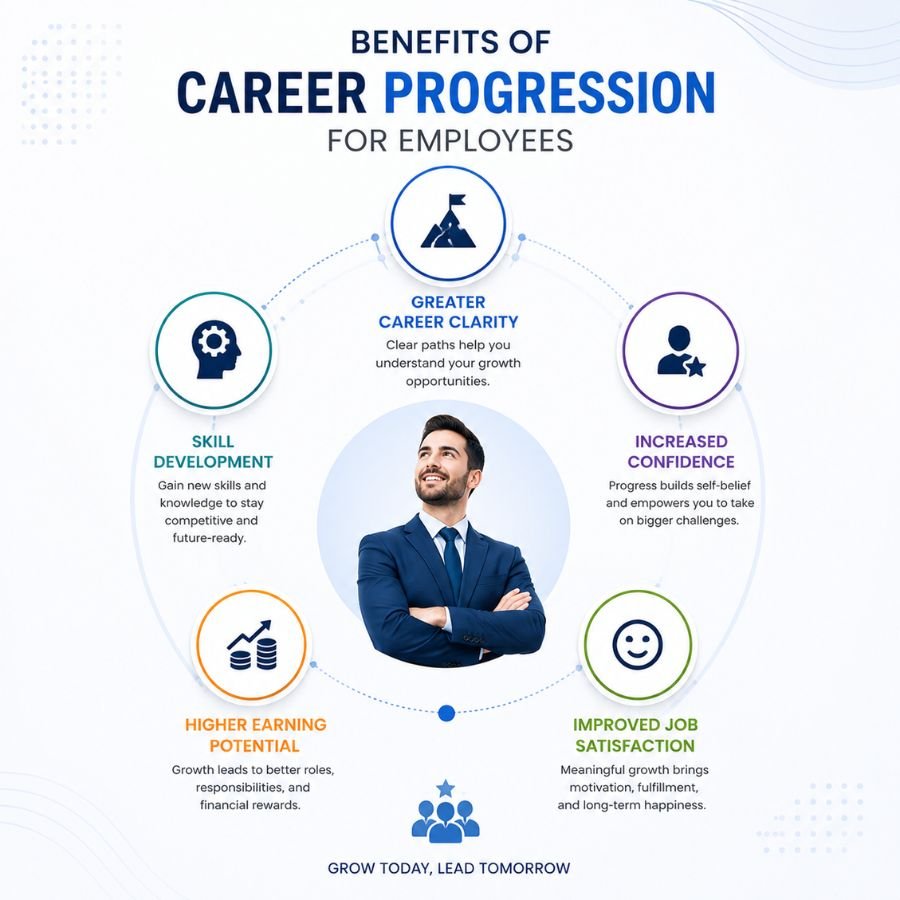
A structured career progression system can provide employees with several advantages.
Greater Career Clarity
Employees can better understand where their current role fits within the organization’s career structure and what opportunities may be available in the future.
Skill Development
Career progression encourages employees to develop technical and soft skills that can prepare them for advanced responsibilities.
Increased Confidence
Knowing what is required for advancement can give employees greater confidence as they plan their professional development.
Higher Earning Potential
Career advancement may provide opportunities for increased compensation when employees move into positions with greater responsibilities.
Improved Job Satisfaction
Employees may feel more motivated when their organization recognizes development, achievement, and professional growth.
Benefits for Organizations
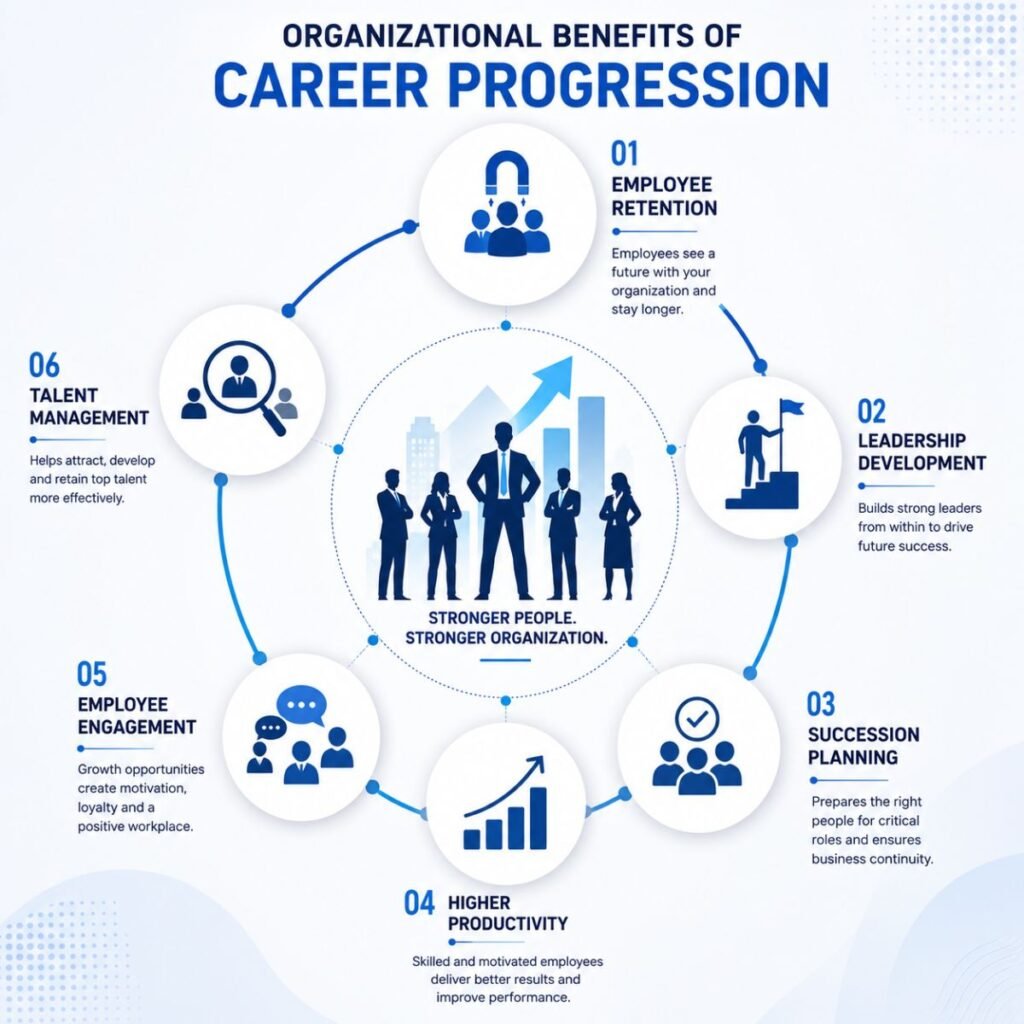
Career progression is not only beneficial for employees; it can also strengthen organizational performance.
Organizations can use structured career paths to identify talented employees and prepare them for future positions. This can create a stronger internal talent pipeline and reduce dependence on external recruitment.
Other organizational benefits include:
- Improved employee retention
- Stronger leadership pipelines
- Better succession planning
- Higher workforce productivity
- Greater employee engagement
- More effective talent management
How Organizations Can Improve Career Progression

Organizations can make career progression more effective by establishing consistent and transparent processes.
Define Promotion Requirements
Clearly explain the skills, performance levels, experience, and qualifications associated with each career level.
Provide Regular Feedback
Managers should provide constructive feedback throughout the year rather than discussing performance only during formal reviews.
Invest in Training
Provide employees with learning opportunities that directly support their current responsibilities and future career goals.
Encourage Mentoring
Mentors can help employees understand career expectations, develop professional skills, and prepare for new responsibilities.
Recognize Achievements
Recognizing meaningful accomplishments can reinforce positive performance and encourage continued development.
Review Career Plans
Career goals can change as employees gain experience or organizational priorities evolve, so development plans should be reviewed regularly.
Tips for Employees
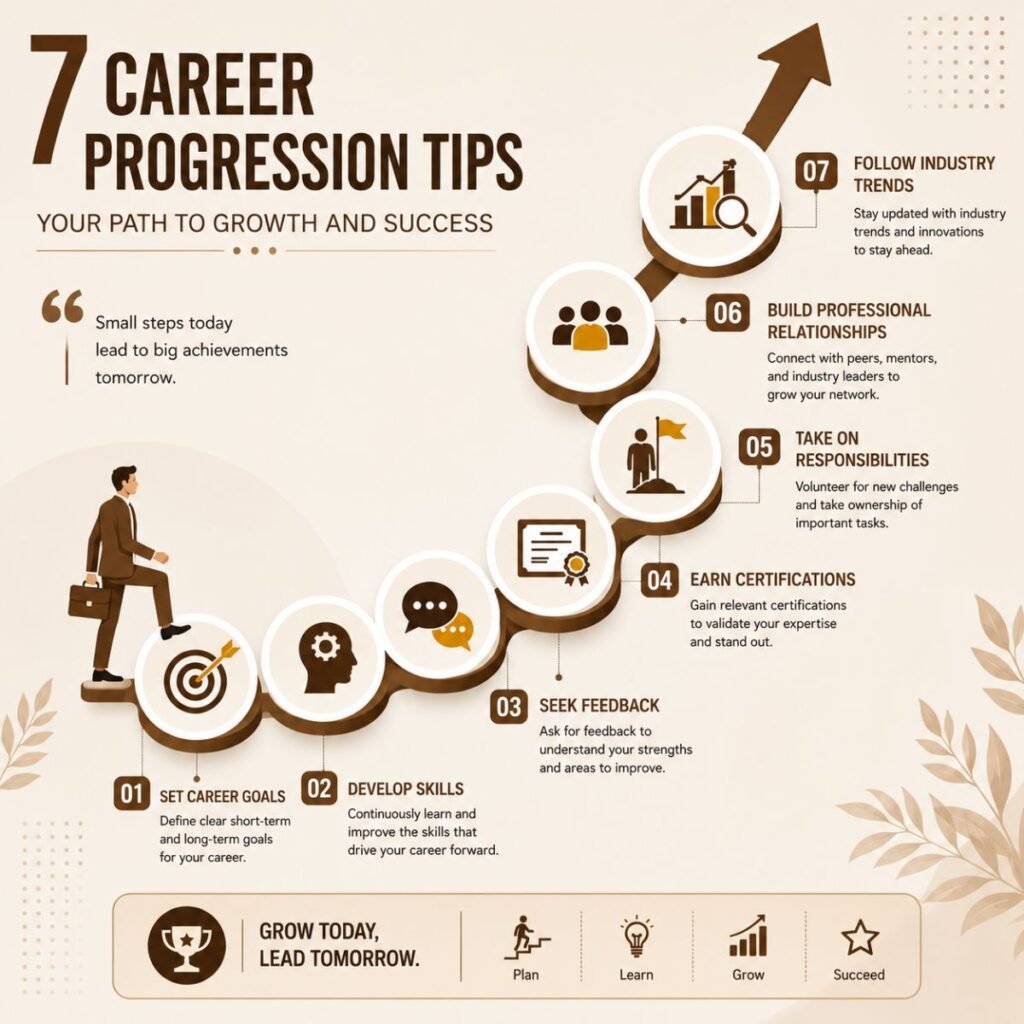
Employees can also take an active role in their career progression.
Start by setting realistic career goals and identifying the skills required for your desired position. Ask managers for constructive feedback and use it to improve your performance.
Other useful strategies include:
- Develop technical skills
- Improve communication abilities
- Earn relevant certifications
- Volunteer for challenging projects
- Take on additional responsibilities
- Build professional relationships
- Learn from experienced colleagues
- Stay informed about industry changes
Career advancement is usually a combination of organizational support and individual effort.
Common Challenges
Career progression programs can face challenges if they are not managed consistently.
Unclear promotion requirements can make employees uncertain about advancement. Limited training opportunities may prevent workers from developing the skills needed for higher positions.
Other challenges can include inconsistent performance evaluations, limited leadership opportunities, poor communication, and insufficient resources for employee development.
Organizations should regularly review their progression systems to identify and address these barriers.
Best Practices for Career Progression
A strong career progression program should be transparent, measurable, and accessible.
Organizations should:
- Create clear career paths.
- Define measurable promotion criteria.
- Provide regular performance feedback.
- Offer relevant training opportunities.
- Encourage mentoring and coaching.
- Recognize employee achievements.
- Support individual development plans.
- Review progression policies regularly.
These practices can help create a workplace where employees understand how professional development connects with career advancement.
Conclusion
Assured career progression provides employees with a structured approach to professional growth while helping organizations develop and retain valuable talent. Clear career paths, transparent promotion criteria, regular feedback, and continuous learning can make advancement opportunities easier to understand and pursue.
Employees who actively develop their skills and communicate their career goals can take greater control of their professional development. At the same time, organizations that invest in fair and consistent progression systems can build a motivated workforce and a stronger pipeline of future leaders.
FAQs
1. What is assured career progression?
Assured career progression is a structured career development system that provides employees with clear opportunities for advancement.
2. Why is career progression important?
It helps employees understand advancement opportunities while improving motivation, retention, development, and workplace engagement.
3. What determines career progression?
Progression may depend on performance, skills, qualifications, experience, competencies, and achievement of defined objectives.
4. How can employees improve career progression?
Employees can set career goals, develop relevant skills, seek feedback, earn certifications, and take on additional responsibilities.
5. How do organizations benefit from career progression?
Organizations can improve retention, productivity, employee engagement, succession planning, and leadership development.