
If you have ever walked through a modern office, hospital, hotel, shopping center, or industrial facility, you have probably benefited from systems that keep the building comfortable, powered, ventilated, and safe. Behind many of these systems are mechanical and electrical engineering professionals.
So, what is an M&E engineer? The role connects different technical systems so they can operate effectively within a building or construction project.
What Is an M&E Engineer?

Their responsibilities can cover the design, coordination, installation, inspection, testing, commissioning, and documentation of these systems.
The exact role depends on the employer, project type, and level of responsibility.
A major part of the job is system coordination. Mechanical and electrical services must fit within the available building space and work alongside architectural and structural elements. Good coordination helps reduce conflicts during construction and supports reliable building operation.
What Does M&E Stand For?
M = Mechanical
Mechanical services include systems such as heating, ventilation, air conditioning, plumbing, pumps, and other mechanical equipment used within a building.
E = Electrical
Electrical services include power distribution, lighting, electrical panels, emergency power, controls, fire alarms, and other electrical infrastructure.
Together, mechanical and electrical services form an important part of building services. The exact scope can vary from one project or organization to another.
What Does an M&E Engineer Do?
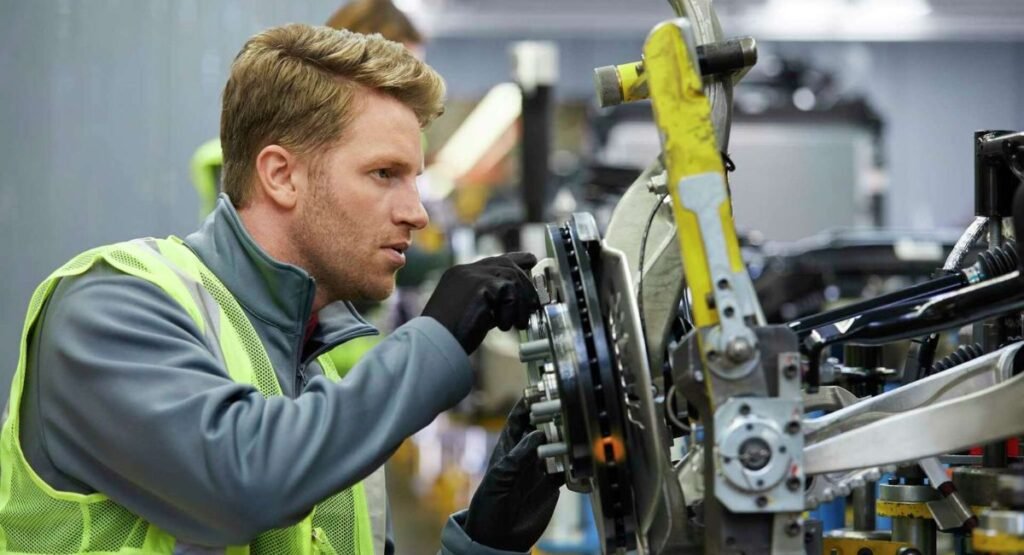
The following activities are common examples, although individual roles differ.
- System design coordination: Helps coordinate mechanical and electrical designs so different services can operate together and fit the building layout.
- Technical drawing review: Reviews engineering drawings and layouts to identify technical issues, inconsistencies, or coordination requirements.
- Site inspections: Checks installed systems and equipment against drawings, specifications, and project requirements.
- Installation supervision: Monitors installation activities to help ensure that mechanical and electrical work follows approved designs and specifications.
- Contractor coordination: Communicates with contractors and other project teams to resolve technical questions and coordinate activities.
- Equipment selection: May assist with selecting appropriate mechanical or electrical equipment according to project requirements.
- Testing and commissioning: Helps verify that installed systems operate as intended through inspection, testing, adjustment, and commissioning activities.
- Maintenance planning: May contribute to maintenance requirements and documentation for building systems.
- Health and safety coordination: Considers relevant safety requirements when engineering systems are designed, installed, tested, or maintained.
- Documentation and reporting: Prepares or reviews technical records, inspection reports, test results, drawings, and handover documentation.
M&E engineers may also prepare or review technical reports, drawings, inspection records, and other project documentation. Understanding how project information is organized can be useful when engineers work with wider project teams and stakeholders. For a broader look at structured project documentation, see this guide to project information memorandums.
The balance between these responsibilities depends heavily on the project and the engineer’s position.
Key Mechanical Systems an M&E Engineer Works With
Mechanical services can represent a significant part of an M&E engineer’s responsibilities. These systems help control indoor conditions, move water and air, and support the safe operation of a facility.
- HVAC systems: Heating, ventilation, and air-conditioning systems used to manage indoor environmental conditions.
- Heating systems: Equipment and distribution systems used to provide heat where a building requires it.
- Ventilation systems: Systems that introduce, distribute, or remove air from building spaces.
- Air-conditioning systems: Systems designed to control indoor temperature and, depending on the system, humidity and air quality.
- Plumbing systems: Building systems that distribute water and remove wastewater.
- Water supply systems: Pipes, pumps, tanks, and related equipment used to deliver water around a facility.
- Drainage systems: Systems that collect and carry wastewater and other discharged water away from building areas.
- Fire protection systems: Building systems designed to support fire safety, such as fire suppression and related mechanical services.
- Pumps and mechanical equipment: Equipment used to move fluids or support various mechanical building systems.
The engineer’s involvement can range from design coordination to installation inspection, testing, commissioning, and maintenance support.
Key Electrical Systems an M&E Engineer Works With
Electrical services provide power, lighting, controls, and other essential functions within a building.
- Electrical power distribution: The infrastructure used to distribute electrical power from the incoming supply to different parts of a facility.
- Lighting systems: Electrical systems that provide illumination for occupied and operational areas.
- Emergency lighting: Lighting designed to provide illumination when normal power or lighting is unavailable.
- Generators: Equipment that can provide electrical power when the normal supply is unavailable or additional power is required.
- UPS systems: Uninterruptible power supply systems that provide temporary or conditioned electrical power to connected equipment.
- Switchgear: Electrical equipment used for controlling, protecting, and isolating electrical circuits.
- Electrical panels: Enclosures containing equipment used to distribute and control electrical circuits.
- Earthing and bonding: Electrical safety arrangements that help establish appropriate conductive connections and fault-current paths.
- Low-voltage systems: Electrical and electronic systems operating within defined low-voltage ranges, depending on the application and applicable standards.
- Fire alarm systems: Systems that detect and communicate indications of fire or smoke conditions within a facility.
- Building management and control interfaces: Connections between building services and control systems used to monitor or manage equipment.
M&E Engineer Responsibilities on a Construction Project
Each project stage creates different technical responsibilities.
Design Stage
During design, the engineer may review drawings, specifications, calculations, equipment requirements, and service layouts. Coordination is particularly important because mechanical and electrical services need to share building space with structural and architectural components.
The engineer may also participate in design reviews and help identify potential service clashes before construction begins.
Construction Stage
Site coordination can involve checking equipment locations, pipework, ductwork, cable routes, access requirements, and interfaces between different services.
Testing and Commissioning Stage
Testing and commissioning help establish whether installed systems function according to their intended requirements.
An M&E engineer may participate in functional testing, review test results, identify outstanding issues, and help coordinate corrective actions before systems are handed over.
Handover Stage
The handover stage involves completing technical records and transferring information about installed systems to the building owner or operator.
Depending on the project, documentation can include operation and maintenance manuals, test certificates, as-built information, equipment details, commissioning records, and training information.
Important Skills for an M&E Engineer
Technical knowledge is important, but successful M&E work also requires communication and coordination skills.
- Technical knowledge: Understanding mechanical and electrical building systems and how they operate.
- Communication: Explaining technical information clearly to engineers, contractors, clients, and other project participants.
- Coordination: Aligning building services with architectural, structural, and construction requirements.
- Problem-solving: Identifying technical problems and helping develop practical solutions.
- Drawing interpretation: Understanding engineering drawings, layouts, details, and technical documentation.
- Project awareness: Understanding how engineering activities relate to schedules, resources, costs, and project requirements.
- Attention to detail: Carefully checking drawings, installations, specifications, equipment, and records.
- Safety awareness: Recognizing relevant risks associated with engineering systems and construction activities.
These skills can become more important as an engineer takes responsibility for larger systems, teams, or projects.
Where Do M&E Engineers Work?
M&E engineers can work across many types of buildings and facilities. Their working environment depends on their employer and specialization.
Common examples include:
- Construction projects: Working with contractors and project teams during building development.
- Commercial buildings: Supporting mechanical and electrical systems in offices and other commercial facilities.
- Residential developments: Coordinating building services in apartments, housing projects, and residential complexes.
- Hospitals: Working with complex building systems that support healthcare facilities.
- Industrial facilities: Supporting engineering systems used in manufacturing and industrial environments.
- Data centers: Working with critical mechanical and electrical infrastructure.
- Hotels: Coordinating systems that support guest areas and building operations.
- Infrastructure projects: Contributing to mechanical and electrical systems associated with infrastructure facilities.
- Facilities management organizations: Supporting the operation and maintenance of existing buildings.
- Engineering consultancies: Providing engineering, design, coordination, or project support services.
Not every M&E engineer works in all of these environments. Specialization and professional experience influence the type of project an engineer handles.
M&E Engineer vs Mechanical Engineer vs Electrical Engineer
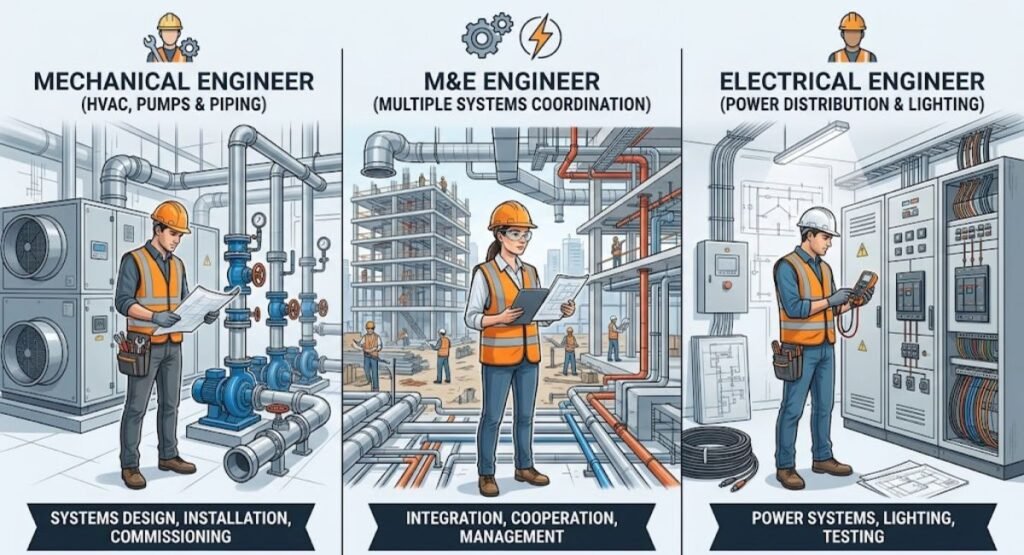
Although these roles can overlap, their primary areas of responsibility are different.
| Role | Main Focus | Typical Responsibilities |
| M&E Engineer | Integrated building services | Coordinates mechanical and electrical systems |
| Mechanical Engineer | Mechanical systems | HVAC, equipment, thermal and mechanical systems |
| Electrical Engineer | Electrical systems | Power, lighting, controls, and electrical infrastructure |
Job titles are not standardized across every organization. A company may assign overlapping responsibilities to engineers depending on its structure and project requirements.
What Qualifications Does an M&E Engineer Need?
There is no single qualification pathway that applies universally to every M&E engineer. Requirements can differ by country, employer, discipline, and level of responsibility.
A relevant pathway may include:
- Engineering degree or technical education: A foundation in engineering or an appropriate technical discipline can provide the knowledge needed for building-services work.
- Mechanical or electrical engineering background: M&E roles often require knowledge of one or both of these disciplines.
- Building-services knowledge: Understanding how mechanical and electrical systems operate within buildings is important.
- Engineering software skills: CAD, BIM, calculation, and documentation tools can support engineering work.
- Site experience: Practical project exposure helps engineers understand installation and construction processes.
- Professional registration: Some roles or jurisdictions may have professional registration requirements.
- Health and safety knowledge: Engineers working on construction projects need awareness of relevant safety requirements.
- Project-specific training: Certain projects may require additional training or certifications.
Anyone considering this career should check the requirements applicable to their country and intended role.
Software and Tools Used by M&E Engineers
Technology plays an important role in modern building-services engineering. The specific software used depends on the company and project.
- CAD software: Used to create and review technical drawings.
- BIM software: Supports digital building models and coordination between different disciplines.
- Building-services design tools: Help engineers design, analyze, or coordinate mechanical and electrical systems.
- Project management software: Supports schedules, tasks, communication, and project information.
- Calculation tools: Used for engineering calculations and technical analysis.
- Spreadsheet software: Useful for calculations, schedules, equipment information, and project records.
- Document-control systems: Help teams manage drawings, specifications, reports, and revisions.
Learning the tools used by a target employer can be useful, but software requirements vary between organizations.
M&E Engineering in Modern Buildings
Modern buildings depend on coordinated building services for everyday operation. M&E engineering contributes to several areas:
- Energy efficiency: Properly designed and coordinated systems can support more efficient building operation.
- Indoor comfort: HVAC and related systems help create suitable indoor environmental conditions.
- Building safety: Electrical, fire, mechanical, and control systems can support safe building operation.
- Reliable power: Electrical distribution and backup systems help provide power to building services and equipment.
- Water management: Plumbing, water supply, and drainage systems support essential building functions.
- Automation: Controls and building management systems can help monitor and manage building services.
- System monitoring: Sensors and control interfaces can provide information about system operation.
- Building performance: Coordinated services support the practical operation and maintainability of a facility.
The performance of these systems depends on design, installation, commissioning, operation, maintenance, and other project factors.
Challenges M&E Engineers Face
M&E engineering involves more than selecting equipment or reviewing drawings. Engineers often have to solve coordination and construction problems under real project constraints.
Limited Plant-Room Space
Mechanical and electrical equipment can require significant space. Engineers may need to coordinate equipment locations while preserving access for operation and maintenance.
Conflicting Services
Ductwork, pipes, cable trays, structural elements, and other services can compete for the same physical space. Early coordination can help identify these conflicts.
Design Changes
Projects can change after construction has started. Engineers may need to review the impact of changes on existing systems and coordinate updated information.
Coordination Problems
Large projects involve multiple teams. Poor communication between disciplines can create technical issues, delays, or rework.
Procurement Delays
Equipment and materials may have different lead times. Delays can affect installation sequences and project schedules.
Installation Quality Issues
Installed work may not always match drawings or specifications. Site inspections can help identify issues requiring correction.
Testing Failures
A system may require adjustment or corrective work when testing reveals that it does not perform as intended.
Tight Project Schedules
M&E work often has to fit within wider construction schedules, making planning and coordination important.
Contractor Communication
Engineers frequently communicate with contractors, subcontractors, consultants, clients, and other disciplines, making clear technical communication essential.
Career Path for an M&E Engineer
A possible career progression may look like:
Graduate/Junior Engineer → M&E Engineer → Senior Engineer → Lead/Project Engineer → M&E Manager
This is only one possible pathway. Actual progression varies according to the organization, country, qualifications, experience, specialization, and professional responsibilities.
An M&E engineer can develop through technical, project, management, or specialist career paths.
Understanding career progression can help engineers plan their professional development, identify suitable specializations, and prepare for more advanced responsibilities over time.
Some engineers may develop deeper expertise in areas such as HVAC, electrical systems, BIM coordination, commissioning, facilities management, or project management.
How to Become an M&E Engineer
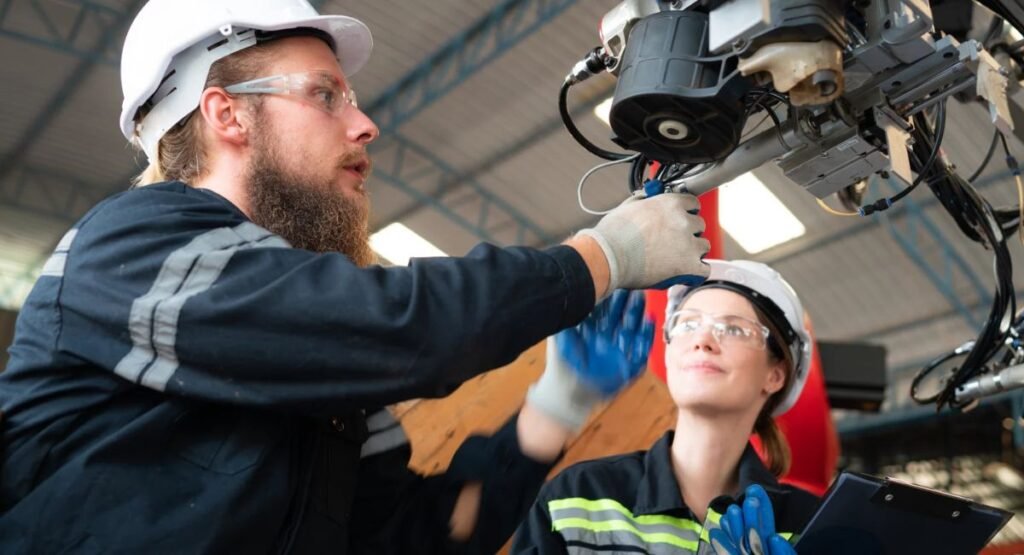
If you are interested in this career, a practical development pathway can include:
- Develop an engineering or technical foundation. Build knowledge in mechanical, electrical, or building-services engineering.
- Learn mechanical and electrical building services. Understand how HVAC, plumbing, power, lighting, controls, and related systems work.
- Build CAD and BIM skills. Learn how technical drawings and digital building models are created and coordinated.
- Gain practical project experience. Site exposure can help connect engineering theory with real installation and construction activities.
- Learn testing and commissioning principles. Understand how completed systems are checked and verified.
- Develop communication and coordination skills. M&E work requires regular interaction with multiple disciplines.
- Pursue relevant professional development. Choose training or qualifications appropriate to your intended role and location.
- Develop a specialization. As experience grows, you may focus on a particular building-services discipline or project responsibility.
Why M&E Engineering Is Important
A building is more than its walls, floors, and structural frame. It also needs systems that provide power, ventilation, water, temperature control, lighting, safety functions, and other services required for operation.
M&E engineering brings these systems together and helps coordinate them with the wider building design. Effective coordination can support reliable operation, safety, comfort, maintainability, and overall building performance.
Common Terms in M&E Engineering
HVAC: Heating, ventilation, and air-conditioning systems used to manage indoor environmental conditions.
BMS: Building Management System, used to monitor and control selected building services.
BIM: Building Information Modeling, a digital approach for representing and coordinating building information.
MEP: Mechanical, Electrical, and Plumbing, a broader term commonly used for building-services disciplines.
HVAC Commissioning: The process of checking and verifying HVAC system operation against intended requirements.
Load Calculation: An engineering calculation used to determine the required capacity of a system or component.
Switchgear: Electrical equipment used to control, protect, and isolate electrical circuits.
Chiller: Equipment used in many cooling systems to produce chilled water for building cooling applications.
AHU: Air Handling Unit, equipment that conditions and distributes air within a building system.
FCU: A local air-conditioning unit that uses a fan and heat-transfer coil to condition air.
Fire Alarm: A system designed to detect and communicate indications of fire or smoke conditions.
Testing and Commissioning: Activities used to verify that installed systems operate according to their intended requirements.
Conclusion
An M&E engineer works with the mechanical and electrical systems that help buildings operate safely, comfortably, and effectively. From HVAC and plumbing to electrical distribution, lighting, controls, and testing, the role can cover a wide range of building-services activities. M&E engineers also help coordinate these systems with architectural and structural requirements throughout a construction project.
For anyone interested in M&E engineering, developing technical knowledge is only one part of the journey. Practical project exposure, drawing interpretation, communication, coordination, problem-solving, and familiarity with relevant digital tools can all contribute to professional development. Because responsibilities and qualification requirements vary, aspiring engineers should consider the expectations of their target role, employer, and country.
About the Author
Zain UL Abideen is an SEO specialist and content creator focused on producing clear, practical digital content covering technology, business, careers, and professional topics.
(FAQs)
What does M&E mean in engineering?
M&E means Mechanical and Electrical and commonly refers to mechanical and electrical building services.
What does an M&E engineer do?
An M&E engineer coordinates, reviews, inspects, tests, and supports mechanical and electrical systems on building projects.
What is the difference between M&E and MEP?
M&E generally refers to mechanical and electrical services, while MEP additionally includes plumbing.
What qualifications does an M&E engineer need?
Requirements vary, but relevant engineering education, building-services knowledge, practical experience, and professional development can be important.
Where do M&E engineers work?
M&E engineers can work on construction, commercial, residential, industrial, healthcare, infrastructure, and facilities-management projects.