
The introduction of the electric lamp changed the way businesses operated, particularly during the late nineteenth and early twentieth centuries. Before electric lighting became widely available, factories, shops, offices, and other commercial buildings depended on daylight or traditional lighting methods such as candles, oil lamps, and gas lights. These options often provided limited illumination and made evening operations more difficult.
Electric lighting gave businesses greater control over their working environments. Factories could continue production after sunset, retailers could display products more effectively, and offices could complete important tasks without depending entirely on natural light. It also created opportunities for new industries involved in electricity generation, electrical equipment, and installation services.
The electric lamp helped businesses extend operating hours, improve workplace visibility, support industrial production, attract customers, and develop new commercial opportunities. Its influence went beyond providing light because it became an important part of the wider transformation of modern business and industry. Understanding the role of an M&E engineer can help explain how these systems are designed and maintained.
Business Operations Before the Electric Lamp
Before electric lighting became commercially practical, businesses used different sources of artificial light to continue working after sunset. Candles, oil lamps, kerosene lamps, and gas lighting were common in homes, factories, shops, and public buildings.
However, these lighting methods had several limitations.
- Candles: Produced relatively weak light and needed frequent replacement.
- Oil lamps: Provided illumination but required regular fuel supplies and maintenance.
- Gas lighting: Offered brighter indoor lighting but required gas infrastructure and involved open flames.
- Natural daylight: Made many workplaces dependent on weather conditions and available sunlight.
Gas lighting had already helped businesses operate beyond daylight hours before electric lamps became widespread. However, it was not equally suitable for every workplace.
Factories needed dependable lighting for machinery and production activities. Shops wanted attractive displays, while offices needed sufficient illumination for reading, writing, and managing documents.
The development of practical electric lighting offered businesses another option that gradually addressed many of these challenges.
7 Major Ways the Electric Lamp Changed Businesses

1. Businesses Could Extend Their Operating Hours
One of the biggest changes brought by electric lighting was the ability to continue commercial activities after sunset.
Previously, many businesses depended heavily on daylight or traditional lighting systems. Electric lamps made it easier to illuminate workplaces during evening and nighttime hours.
This created new opportunities for different types of businesses.
For example, manufacturing companies could organize additional production shifts, retail stores could welcome customers in the evening, and restaurants could continue serving people after dark.
Longer operating hours also allowed businesses to organize their schedules more flexibly.
However, electric lighting did not automatically mean that every business increased its working hours. The decision still depended on customer demand, staffing costs, and the availability of electricity.
2. Factory Production Became More Flexible
Factories were among the businesses that benefited significantly from improved electric lighting.
Manufacturing environments often contained machinery, production materials, and work areas that required sufficient visibility. Poor lighting could make detailed tasks more difficult, especially during the evening.
Electric lamps helped factories illuminate indoor production areas more consistently.
Workers could perform activities such as:
- Inspecting raw materials and finished products.
- Reading measurements and production instructions.
- Operating machinery in better-lit environments.
- Identifying visible defects in manufactured goods.
- Completing certain production activities after sunset.
For example, textile factories could use artificial lighting to illuminate production floors where workers operated machinery and handled materials.
Better illumination supported production flexibility, although overall productivity also depended on machinery, management, worker training, and manufacturing processes.
3. Workplace Visibility and Safety Improved
Electric lighting offered another important advantage: it did not require an open flame at the point of illumination.
Older lighting systems, particularly gas and oil lamps, involved flames that could create additional risks in certain industrial environments.
Factories handling cotton, paper, wood, and other combustible materials had reasons to consider alternative lighting systems.
Electric lamps helped employees see machinery, tools, work surfaces, and surrounding areas more clearly.
A notable historical example is Olympia Mills in South Carolina, which opened in 1899 as an electrically powered textile mill. Its use of electricity was particularly relevant because cotton dust could create serious fire and explosion risks around open flames.
Nevertheless, electric lighting was not completely risk-free. Early electrical installations required proper wiring, maintenance, and careful handling.
The important improvement was that businesses could reduce their dependence on open-flame lighting while providing better visibility in many workplaces.
4. Retail Stores Became More Attractive to Customers

Electric lighting changed the way retail businesses presented their products.
Before widespread electric lighting, shop owners had fewer options for creating bright and attractive displays after sunset. Electric lamps made it easier to illuminate shop windows, shelves, counters, and merchandise.
This offered several advantages:
- Customers could see products more clearly.
- Illuminated windows attracted attention from pedestrians.
- Stores could create more welcoming shopping environments.
- Retailers gained greater flexibility with evening opening hours.
- Product displays became an important part of store presentation.
For example, department stores could use electric lighting to highlight clothing, household products, and other merchandise.
Lighting therefore became more than a basic requirement. It developed into a useful retail and marketing tool that helped businesses improve the customer experience.
5. Office Work Became More Convenient
Electric lamps also influenced offices and professional workplaces.
Businesses relied on employees to manage paperwork, maintain financial records, prepare reports, write correspondence, and organize important documents.
These activities required sufficient illumination.
Electric lighting allowed office employees to continue their work during darker hours without depending entirely on natural daylight or traditional lamps.
It also supported the development of larger commercial buildings where artificial lighting could illuminate areas that received limited sunlight.
As electrical infrastructure expanded, offices gained access to other electrically powered equipment and building services.
This helped make electricity an increasingly important part of everyday commercial operations.
6. Hotels, Restaurants, and Entertainment Businesses Expanded
Electric lighting created new opportunities for businesses that depended on evening customers.
Hotels, restaurants, theatres, and entertainment venues benefited from the ability to illuminate their buildings and public spaces after sunset.
For example:
- Restaurants could create comfortable evening dining environments.
- Hotels could illuminate entrances, corridors, and reception areas.
- Theatres could use electric lighting to support performances and stage effects.
- Entertainment venues could attract visitors with illuminated signs and displays.
These developments helped businesses improve their appearance and provide services beyond normal daylight hours.
Lighting became an important part of the customer experience, particularly in growing urban commercial areas.
7. New Electrical Businesses and Industries Developed
The impact of electric lighting extended beyond the companies that installed lamps.
Businesses needed electrical equipment, including generators, wiring, switches, meters, fixtures, and replacement components.
This created opportunities for manufacturers, electricians, engineers, installation companies, and electricity suppliers.
A major development occurred in 1882 when Thomas Edison’s Pearl Street Station began supplying electricity to customers in lower Manhattan, New York.
The station demonstrated how a central generating facility could provide electricity to multiple customers in a commercial district.
As electrical networks expanded, more businesses gained access to electric lighting and other electrical technologies.
This helped establish electricity as an important part of commercial infrastructure.
How Electric Lighting Affected Different Business Sectors
Although electric lighting benefited many industries, its influence varied according to the type of business and its operating requirements.
| Business sector | Impact of electric lighting |
| Manufacturing | Improved visibility and supported additional production shifts. |
| Retail | Made product displays and shop windows more attractive. |
| Offices | Supported paperwork and administrative activities after sunset. |
| Transportation | Improved visibility in railway stations and commercial facilities. |
| Hospitality | Helped hotels and restaurants serve evening customers. |
| Entertainment | Supported illuminated theatres and other evening venues. |
Manufacturing companies benefited from better-lit production environments, while retailers gained new opportunities to attract customers. Hospitality and entertainment businesses used lighting to improve their buildings and evening services.
This shows that the electric lamp was not limited to one industry. It influenced many different areas of commercial activity.
Economic Impact of Electric Lighting on Businesses
Electric lighting contributed to economic development by changing how businesses used buildings, organized work, and invested in technology.
Its economic influence can be understood through several important developments.
Increased Commercial Activity
Businesses could serve customers and carry out certain operations after sunset. This created additional opportunities for shops, restaurants, entertainment venues, and manufacturers.
Investment in Electrical Infrastructure
The demand for electric lighting encouraged investment in power stations, generators, electrical wiring, and distribution networks.
These systems also created the foundation for wider commercial electricity use.
Growth of Electrical Manufacturing
Companies began producing and supplying lamps, electrical equipment, switches, wiring systems, and related products.
Installation and maintenance services also became important business activities.
Improved lighting helped businesses extend working hours and organize operations more effectively. Today, companies can also evaluate operational performance through business intelligence exercises.
New Employment Opportunities
The expansion of electrical technology increased demand for workers with relevant technical skills.
Electricians, electrical engineers, equipment manufacturers, and utility workers became increasingly important to the growing electrical industry.
Better Use of Commercial Buildings
Businesses could illuminate indoor areas that previously received limited natural light. This made it easier to organize work across different periods of the day.
Overall, electric lighting supported a wider shift toward electricity-based business operations.
Advantages and Disadvantages of Electric Lamps for Businesses
Although electric lamps provided important benefits, their adoption also involved financial and operational challenges.
| Advantages | Disadvantages |
| Allowed more flexible operating hours. | Required investment in electrical installations. |
| Improved visibility in workplaces. | Electricity was not available everywhere. |
| Reduced dependence on open-flame lighting. | Early systems required specialist maintenance. |
| Improved retail product displays. | Installation could be expensive. |
| Supported industrial production shifts. | Longer shifts could contribute to worker fatigue. |
| Created new electrical business opportunities. | Traditional lighting businesses faced competition. |
Why Was Electric Lighting Expensive for Some Businesses?
Early electric lighting systems required more than simply purchasing light bulbs.
Businesses needed access to electricity, suitable wiring, electrical fixtures, and generating or distribution equipment.
In areas without established electricity networks, companies sometimes needed to invest in their own power-generation facilities.
Smaller businesses could find these expenses difficult to manage.
Electricity distribution also had technical limitations during its early development. For example, the original Pearl Street system used direct current, which limited the distance over which electricity could be distributed economically.
As electrical technology improved and power networks expanded, electric lighting became more accessible to commercial users.
Before and After Electric Lighting: A Business Comparison
The following table highlights how electric lighting changed different aspects of business operations.
| Business activity | Before widespread electric lighting | After electric lighting became available |
| Working hours | Greater dependence on daylight and traditional lighting. | More flexibility for evening and night operations. |
| Factory work | Some indoor areas had limited illumination. | Production areas could receive more consistent lighting. |
| Retail displays | Evening product presentation was more difficult. | Illuminated windows and displays attracted attention. |
| Office activities | Relied on daylight, gas, or oil lamps. | More dependable artificial illumination. |
| Workplace lighting | Open flames were common with older systems. | Electric lamps removed the need for flames at the light source. |
| Commercial infrastructure | Traditional fuel and gas systems were important. | Electrical networks and equipment expanded. |
| Entertainment | Evening activities relied on older lighting technologies. | More opportunities for illuminated venues and performances. |
The main difference was not simply that businesses became brighter. Electric lighting gave companies greater control over their working environments and created new opportunities for commercial development.
How the Electric Lamp Influenced Modern Businesses
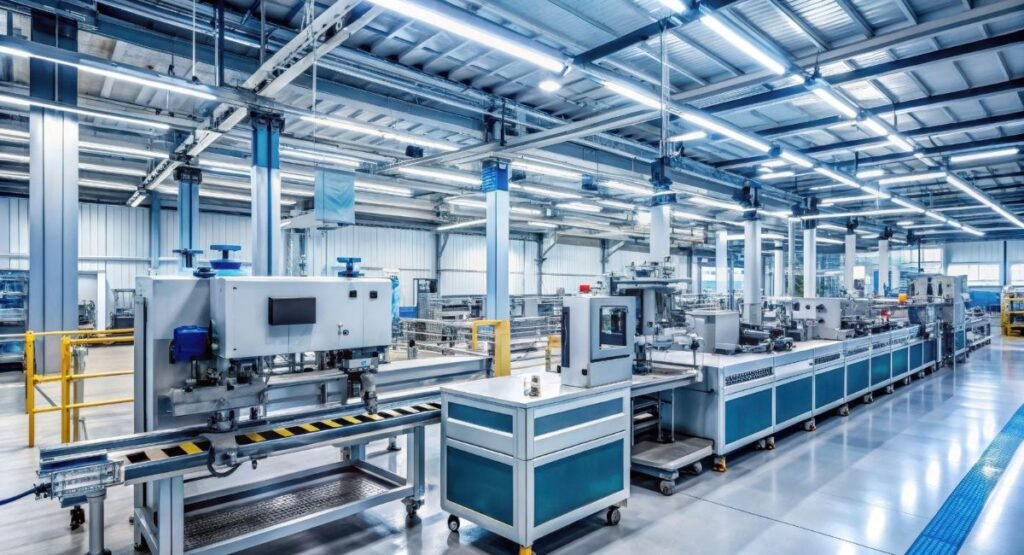
The development of the electric lamp helped establish the foundations of modern commercial lighting.
Today, businesses use advanced lighting systems in factories, offices, shopping centres, warehouses, hospitals, hotels, and other commercial buildings.
Modern lighting technology has developed considerably beyond early incandescent lamps.
Some important developments include:
LED lighting: Modern LED systems provide energy-efficient illumination for commercial and industrial buildings.
Smart lighting: Businesses can use sensors and automated controls to adjust lighting according to occupancy and operating requirements.
Industrial lighting: Modern factories use carefully designed lighting systems to support visibility around machinery and production areas.
Retail lighting: Stores use different lighting arrangements to highlight products and improve the shopping environment.
Office lighting: Modern workplaces use lighting systems designed to support visibility and comfortable working conditions.
These technologies represent the continued development of electrical systems that expanded through the commercial adoption of electric lighting.
Conclusion
The electric lamp had a major influence on businesses because it changed how commercial activities could be organized after sunset. Factories gained greater flexibility in production schedules, shops improved their product displays, offices benefited from more dependable illumination, and entertainment businesses developed new opportunities to serve evening customers.
Its influence also encouraged investment in electrical infrastructure and created demand for new products, technical skills, and services.
Although installation costs and limited electricity access initially slowed adoption, electric lighting gradually became an essential part of commercial and industrial environments.
Ultimately, the electric lamp helped transform businesses by extending operating opportunities, improving workplace visibility, supporting industrial development, and contributing to the growth of modern electrical infrastructure.
(FAQs)
1. How did electric lighting change factory operations?
Electric lighting improved visibility in factory production areas and allowed businesses to organize evening and nighttime shifts. It also reduced the need for open-flame lighting in certain industrial environments.
2. Why was electric lighting important for businesses?
It helped businesses operate more flexibly, improve workplace visibility, display products more effectively, and adopt new electrical technologies.
3. Did electric lamps increase business working hours?
Electric lamps made longer operating hours more practical by providing illumination after sunset. However, actual working schedules depended on business demand, employee arrangements, and operating costs.
4. How did electric lighting affect retail stores?
Electric lighting allowed retailers to illuminate shop windows, display products clearly, improve store environments, and attract customers during evening hours.
5. What were the main disadvantages of early electric lighting?
The main disadvantages included high installation expenses, limited electricity availability, maintenance requirements, and the possibility of worker fatigue when businesses introduced longer shifts.